Clinician Educator Fellowship
The vision of the UCSF Division of General Internal Medicine (DGIM) Clinician Educator Fellowship is to train future clinician-educator leaders in academic general internal medicine.
We are pleased to offer multiple Clinician Educator Fellowship positions in the 2027 – 2028 academic year. Fellowship positions are structured as a one-year program but may be extended to two years with Fellowship Director approval. Through mentorship within our Division and beyond, as well as protected time to explore one's interests in academic general internal medicine, this fellowship position is designed to position fellows well for promising careers as clinician-educators in academic general internal medicine by expanding skills in clinical medicine, clinical teaching, scholarship, and medical education.
Clinical and Educational Activities
Each fellow will spend approximately 50% time in a mixture of direct clinical care and precepting. Fellows will provide primary care for their own panel of patients at one of the DGIM ambulatory sites at UCSF Health’s Mount Zion Campus and they shall teach/supervise residents and medical students at UCSF’s Mt. Zion campus. Longitudinal mentorship will be provided by the Fellowship Director as well as other experienced UCSF faculty. Fellows will gather regularly for Fellow Didactics (example topics including: clinical precepting skills, development of a clinician-educator CV/portfolio, job negotiations, early mentorship, etc.) and will participate in UCSF-wide Educational Scholarship Conferences (ESCape), as well as Health Professions Education Journal Clubs, throughout the year. Fellows will have opportunities to teach in resident didactics and attend resident retreats as well as to teach students within the UCSF School of Medicine.
Primary Care Clinic Population
DGIM provides primary care for a socioeconomically and ethnically diverse patient population of over 25,000 patients at 4 clinical sites on the Mt. Zion Campus. The population we serve is approximately 47% White, 26% Asian, 10% Latino/Latina, 8% Black/African American, and 9% other ethnicities. The payor mix is also diverse: about 53% private insurance, 24% Medicare, 6% Medicare Advantage, 13% Medi-Cal, and 4% self-pay. We strive to be a welcoming outpatient practice that treats patients of any ethnicity, sexual orientation or gender identity, and socioeconomic background with respect, dedication, and partnership. We have many research faculty, QI leaders, and clinic leaders dedicated to studying health disparities and developing creative solutions to counteract disparities.
Scholarship and Career Development
Approximately 50% of the fellows' effort will be directed to scholarship and/or development of an area of expertise in academic general internal medicine and primary care. Fellows are encouraged to take advantage of our Health Professions Education Pathways Program and/or the Teach for UCSF Certification Program. Fellows can also consider taking graduate courses within UCSF and some fellows have pursued a MA in Education at UC Berkeley. All fellows are expected to complete a scholarly project of their choosing (research, curriculum development, health systems improvement project, etc.) and disseminate this work at local and/or national meetings.
Fellows will also have opportunities to develop additional clinical expertise in a specific area of clinical medicine, if desired. Recent prior fellows have developed areas of expertise and scholarship in clinical geriatrics, hepatology, addiction medicine, behavioral medicine, and quality improvement. Other potential areas of expertise and scholarship might include systems change, women's health, preventive medicine, clinical nutrition, medical informatics, etc.
Area of Concentration (AOC)
Fellows may optionally choose to participate in an Area of Concentration (AOC) to more formally expand their skillset in a specific area of interest:
- Health Systems Science/Clinical Innovation: Primary care practices constantly undergo improvement efforts to meet the evolving needs of patients and providers alike, and being able to teach quality improvement (QI) theory and mentor others through QI efforts are vitally important skills. In this AOC, fellows will work closely with the Fellowship Director, who is also the DGIM Physician Lead for Quality Improvement Education, to teach and mentor trainees through QI projects via the longitudinal primary care residency QI curriculum. Additionally, they will participate in our Division’s QI efforts, actively attend the QI committee, and will complete the Teaching Quality Improvement and Patient Safety (QI/PS) track of the Teach for UCSF Certification Program.
- Primary Care Addiction Medicine*: Caring for patients with substance use disorders (SUD) is a foundational component of primary care, especially in large urban centers like San Francisco. In this AOC, fellows will work closely with the co-director of DGIM’s embedded SUD service line, the Primary Care Addiction Medicine (PCAM) Clinic (Dr. Era Kryzhanovskaya) to learn best practices in SUD screening, diagnosis, and management and to provide care within the PCAM Clinic. Fellows will also have the opportunity to participate in educational curricula for trainees and explore addiction/SUD-focused scholarship projects with select mentors within the Division. Fellows will participate in the monthly DGIM Controlled Substance Review Committee to provide an educational service to DGIM to guide other clinicians regarding management for complex patients on controlled substances. Fellows may participate in the Division’s Screening, Brief Intervention and Referral to Treatment (SBIRT) Collaborative Care Program, a Division-wide interprofessional program focused on delivering multifaceted high-quality substance use disorder care.
*This training is not synonymous to an ACGME-accredited Addiction Medicine Fellowship and there will be no associated certification as part of this AOC.
Details
Applicants must be in the final year of (or have completed) an approved residency in Internal Medicine or Med-Peds. Fellows will be selected based on demonstrated excellence in clinical care and teaching and academic promise. Applicants may describe in their application material how they have demonstrated proactive pursuit of career advancement opportunities and/or resilience and perseverance in their personal challenges and adversity. Of note, we adhere to UCSF-wide policies of anti-discrimination in our selection process (https://ophd.ucsf.edu/about-us). Salary with benefits will be provided at the appropriate UCSF post-graduate level (for reference: in 2025-2026 PGY-4 salary, which includes annual salary plus housing stipend, is $106,127.00 /year). Moreover, fellows will receive a meal card to use at UCSF cafeterias (for reference: in 2025-2026 this was $300/month). All fellows will have 4 weeks of vacation time to use at their discretion, a few additional days off during the winter holiday season, as well as all clinic holidays off.
To apply for the 2027-2028 Academic Year, please send a CV, letter of intent, and name/roles/email/telephone numbers for 3 references (whom will be contacted at a later time) to the Fellowship Director Mike KW Cheng, MD, MAEd ([email protected]). We encourage applications to be submitted by Winter 2026, but applications will continue to be accepted until positions are filled. Offers are given on a rolling basis.
Thank you for your interest, I look forward to hearing from you soon! If you have further questions or would like to meet to discuss the Fellowship, please do not hesitate to reach out via email.
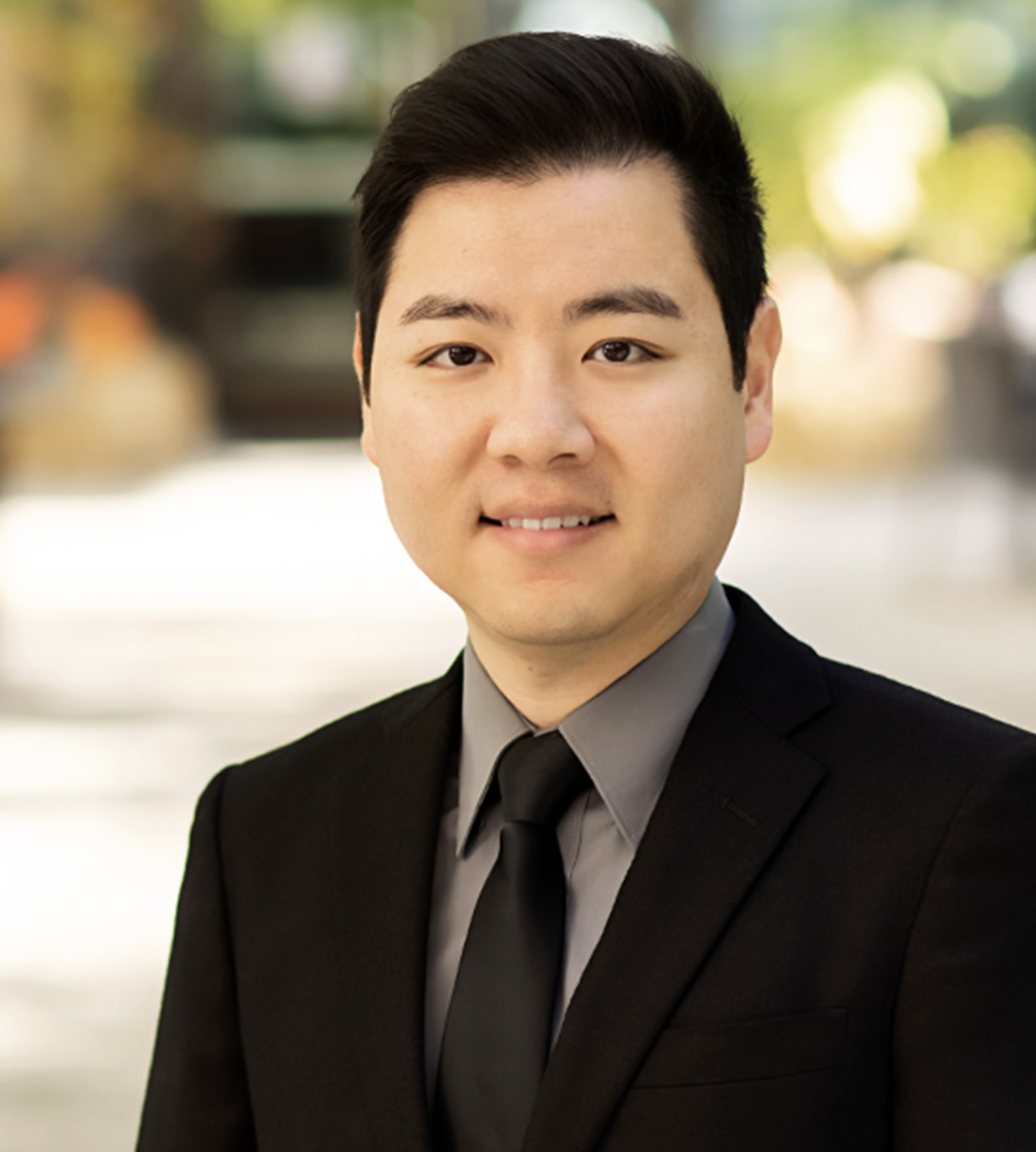
Mike Kai Wick Cheng, MD, MAEd
UCSF DGIM Clinician Educator Fellowship Director